
|
California ranchers could gain a permanent framework for wolf compensation and conflict prevention under legislation advancing through the statehouse, but the proposal would not provide the money needed to make producers whole or deploy deterrents across the state’s expanding wolf territory.
Senate Bill 1135 by Sen. Catherine Blakespear, D-Encinitas, would establish a wildlife coexistence program within the California Department of Fish and Wildlife and place the state’s wolf compensation initiative into law.
For livestock producers, the measure would preserve assistance for nonlethal deterrents, for livestock killed or injured by wolves, and for indirect losses like reduced weight gain and lost reproductive performance.
Yet the program’s reach would depend on future appropriations. The state budget Gov. Gavin Newsom signed last week did not include the $30 million wolf management package sought by California Farm Bureau, California Cattlemen’s Association and rural advocates. Lawmakers also left out a broader request to restore CDFW’s statewide response to conflicts involving bears, mountain lions, coyotes and other wildlife.
The result is a bill that would establish the rules for managing an intensifying conflict while leaving unanswered who will pay for it.
“This is the first step of creating this program and then next year, hopefully, there will be an appropriation,” Blakespear told lawmakers last week.
A stopgap as wolf losses mount
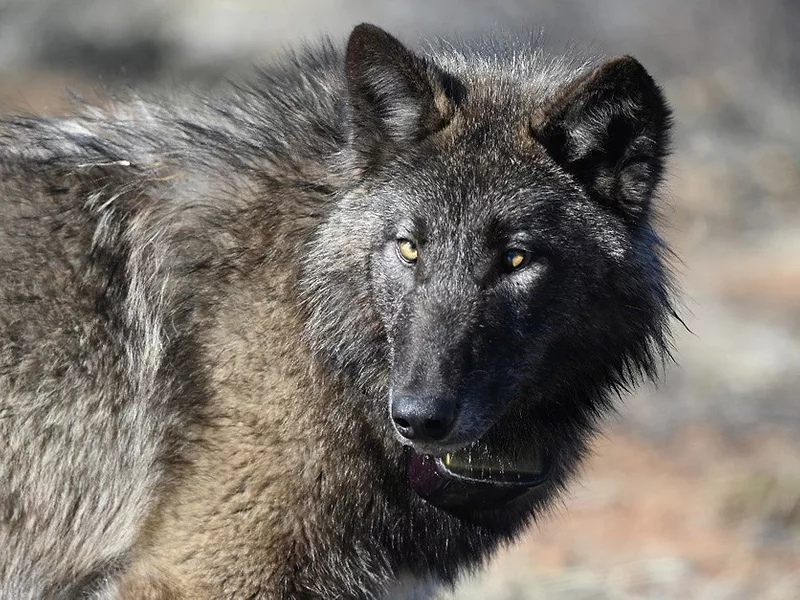
The funding gap is unfolding as California’s wolf population spreads across Northern California. The state is now home to 12 packs and CDFW confirmed 26 livestock deaths from wolf attacks during the first three months of 2026. That followed 196 confirmed attacks in 2025, a state record.
Last week CDFW awarded the farm bureau’s nonprofit arm, the California Bountiful Foundation, $1.1 million to administer compensation payments. The foundation will distribute the money, while the department continues determining which losses qualify.
Most of the grant will support payments for confirmed direct losses, along with some county implementation costs. CAFB will also provide outreach, education and equipment. Resource conservation districts in Sierra Valley and Honey Lake Valley and the nonprofit Working Circle received separate grants for technical assistance and training.
 Asm. Catherine Blakespear (office photo)
The award offers immediate relief, but it is not the major new investment ranching groups sought in the budget this year. It also falls well short of restoring the original three-part compensation program. Current resources have largely been limited to livestock deaths and injuries, leaving producers without broad access to upfront deterrence funding or payments for the less visible economic effects of wolves moving around cattle.
“While not a solution to the conflict, the Wolf Livestock Compensation Program is one avenue that helps ranchers deal with loss,” said CAFB President Shannon Douglass in a statement. “Until we have more options to deter wolves, we will keep seeing more attacks on livestock.”
CDFW Director Meghan Hertel said the department has heard clearly from ranchers about “how hard the return of wolves has been on their livelihoods — not just financially, but in the day-to-day toll of managing this change.”
The original pilot received $3 million in 2021 and spread funding across direct losses, indirect impacts and nonlethal deterrence. Nearly two-thirds of the initial money went toward deterrence.
That funding was exhausted in early 2024. Lawmakers then provided $600,000, prompting CDFW to narrow compensation to deaths and injuries. In 2025 they added $2 million. Agricultural groups maintained those amounts were insufficient to keep pace with wolf expansion or ranchers’ demand for preventive tools.
This year CAFB and Cattlemen’s renewed the funding push alongside Rural County Representatives of California and the Office of Kat Taylor, which frequently lobbies on conservation agriculture programs. The coalition asked for $25 million to replenish compensation and deterrence funding, $1 million for additional CDFW staff, $960,000 for collaring wolves and $3 million for a flexible management fund. It also sought $500,000 to continue CDFW’s partnership with the University of California, Berkeley’s wolf research project and $300,000 for UC Cooperative Extension research and rancher outreach.
The coalition letter argued that limited staffing has slowed population monitoring, outreach and investigations of suspected depredations. At the time, only four of California’s 10 known packs had working GPS collars. The groups said collar information is critical for warning producers, targeting deterrence measures and determining whether losses qualify for compensation.
None of the $30 million package was included in the enacted budget. A broader coalition also sought about $18 million to rebuild the statewide wildlife-conflict program, bringing the combined request to nearly $49 million. That funding was also left out, although lawmakers postponed some decisions on climate bond and Greenhouse Gas Reduction Fund spending until after the summer recess, granting another window of opportunity. In May Newsom proposed $1 million to sustain the program.
Farm groups move to neutral
Despite the lack of funding, the farm bureau and Cattlemen’s removed their opposition to SB 1135 after negotiations led to new protections in the bill that reflect the realities of raising livestock across large and often rugged landscapes.
When adequately funded, a portion of the money would be reserved for proactive deterrence, which includes range riders, livestock guardian dogs, fladry, fencing, carcass management and hazing. As the fund balance declines, CDFW would gain more flexibility to direct the remaining money toward direct loss claims.
SB 1135 would generally require a producer in an established wolf territory to adopt and document approved nonlethal practices before receiving compensation. Amendments added the qualification “as practicable” and directed CDFW to consider whether a producer could reasonably deploy the measures.
The factors going into that decision would consider the availability of state assistance, costs, terrain, timing, animal husbandry and restrictions on leased or permitted land. Outside known wolf territory, ranchers could receive compensation for up to two confirmed or probable losses within a year before the deterrence requirement applies.
Pamela Flick, California program director for Defenders of Wildlife, has described the agreement as reflecting the extensive negotiations among wildlife advocates and agricultural groups.
“We’ve worked very closely with the agricultural community to recognize that not every nonlethal tool is going to be practical in every setting,” Flick told lawmakers.
 CDFW Dir. Meghan Hertel (office photo)
 The amendments persuaded CAFB and CCA to shift from opposing the bill to a neutral position.
Producers, however, remain concerned the state could condition compensation on costly management practices without providing enough money, labor or technical support to carry them out.
Asm. Heather Hadwick, R-Alturas, relayed the concerns of ranchers and rural residents in her sprawling northern district who believe the state is demanding more from landowners than it is prepared to deliver.
“My phone is full of dead cow pictures — and sheep and pets,” Hadwick said.
She also pressed Blakespear to reserve a seat for law enforcement on the bill’s proposed technical advisory committee. Sheriffs are often the first officials called when CDFW wardens are unavailable, she said, leaving rural counties to absorb costs tied to wildlife managed and protected by the state.
Hertel promises a pragmatic approach
Much of SB 1135’s implementation would fall to Hertel, who told senators during her confirmation hearing last month that she intends to lead CDFW as a “science-focused, outcome-oriented,” collaborative and pragmatic agency. She said her years working with agricultural producers at Audubon California taught her that farmers and ranchers manage much of the habitat the department is charged with protecting.
Hertel described wolves’ return as both a conservation success and “a really hard challenge” borne largely by Northern California ranchers. During her first five weeks as director, she met with sheriffs, county supervisors and ranchers in seven affected counties.
“Ultimately, it’s not just enough to listen and learn,” she said. “You have to show up with action.”
She pointed to an agreement sharing wolf location data with Siskiyou County, a move to give sheriffs access to less-lethal deterrents like pepper balls, and an interagency effort to direct more resources to affected communities.
A framework awaiting a budget
Although wolves have driven the agricultural debate, SB 1135 would also cover conflicts involving bears, mountain lions, coyotes and other wildlife in rural, suburban and urban communities.
CDFW would maintain a statewide reporting system, investigate incidents, and coordinate with tribes, counties, nonprofits and universities. It would also support local projects and educate residents and landowners on reducing attractants and preventing animals from becoming accustomed to people, homes or livestock.
Supporters argue that reviving a regional network of trained specialists would allow CDFW to intervene before conflicts escalate.
The bill now heads to the Assembly Appropriations Committee, where its potential costs could determine whether it reaches the governor.

