

California lawmakers have left Sacramento after debating a broad slate of bills that could redefine how the state manages farmland, water and agricultural labor. From long-running battles over the Sacramento-San Joaquin Delta and endangered species to new laws on solar projects and school meals, the session reflected California’s widening view of how climate, labor and land policy intertwine with agriculture.
The year began with the California Farm Bureau and the California Association of Winegrape Growers pushing for a dollar-for-dollar tax credit for farmers shouldering overtime wages. Championing Senate Bill 628, Sen. Shannon Grove, R-Bakersfield, leaned on new research to point out that farmworkers have been taking home less money since the law passed in 2016. She argued wages are the only factor farmers can control — at a time when regulatory mandates out of Sacramento have driven up costs for water and other necessities.
Yet Democrats locked arms with a powerful labor coalition opposing the bill and voted the measure down in its first hearing.
An issue that has divided the industry reemerged with Assembly Bill 1156 by Asm. Buffy Wicks, D-Oakland. The controversial bill would have reduced barriers for converting Williamson Act farmland into solar developments, particularly in drought-stressed areas.
Wicks withdrew the bill in the final hours of session, buying time for agriculture advocates to negotiate more balanced reforms that protect both energy goals and farmland preservation. Wicks can revive the bill in January, as the second half of the two-year session gets underway.
Agriculture groups found more immediate success with AB 732 by Asm. Alexandra Macedo, R-Tulare. Signed by Gov. Gavin Newsom this month, the law gives county agricultural commissioners the authority to impose civil penalties — up to $500 per acre or $1,000 for repeat violations — against landowners who allow abandoned fields to become breeding grounds for pests and diseases.
Commissioners, along with several farm groups, praised the bill as a commonsense enforcement tool that replaces cumbersome lien processes and provides flexibility to landowners who show good-faith efforts to clean up before fines are imposed.
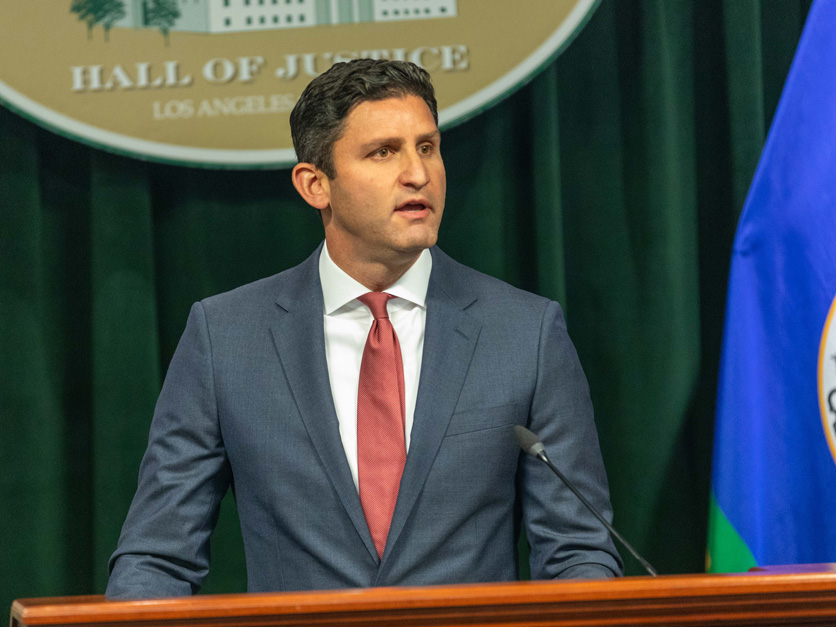 Asm. Jesse Gabriel, D-Encino (Gabriel office photo)
One of the most closely watched fights came over AB 1264, a bill by Asm. Jesse Gabriel, D-Encino, to phase out ultraprocessed foods in California schools. Early drafts drew opposition from growers worried the definition could sweep in dried fruit and 100% fruit juice. After amendments clarified that minimally processed fruits and other value-added food products are excluded, most groups shifted to neutral.
California Citrus Mutual and the California Fresh Fruit Association endorsed the amended bill, writing that “the changes ensure children retain access to nutritious, California-grown products.” Cattle, dairy, egg, poultry and wheat producers remained opposed, along with the California Farm Bureau and the Consumer Brands Association.
Newsom signed AB 1264 earlier this month, calling it a national model for improving school nutrition.
“This new law will help California students by bringing more real, healthy, nutritious foods into our cafeterias,” said Gabriel at the signing ceremony. “And it will incentivize manufacturers in ways that will have impacts far beyond our classrooms and beyond our borders.”
Water fights over storage, wetlands and flows
Water policy dominated much of the legislative calendar, as has long been the case in the Capitol. Drawing perhaps the most cheers from agriculture was SB 72 by Sen. Anna Caballero, D-Merced. It directs the California Department of Water Resources to develop a long-term water-supply strategy integrating groundwater recharge, storage expansion and new conveyance projects.
Under the new law, DWR must incorporate enforceable targets in the California Water Plan starting with the 2028 update. As an interim goal, the state must secure an additional 9 million acre-feet of water by 2040 through strategies like conservation, stormwater capture, desalination, recycling and expanded storage. SB 72 requires the plan address all beneficial uses — urban, agricultural, tribal and environmental — while ensuring safe drinking water for all.
In his signing message, Newsom called SB 72 a critical step toward building resilience and reliability into California’s water infrastructure in the face of climate change.
Irrigation districts and other water interests have hailed the legislation as transformative, asserting that it replaces ad hoc policymaking with coordinated, measurable strategies to meet future demand and climate pressures.
Cut through the clutter! We deliver the news you need to stay informed about farm, food and rural issues. Sign up for a FREE month of Agri-Pulse here.
Playing defense, farm groups helped stall legislation seeking to restore federal wetland protections in response to the U.S. Supreme Court’s Sackett v. EPA decision. SB 601 by Sen. Ben Allen, D-Santa Monica, would extend state oversight to “nexus waters” excluded from federal jurisdiction.
Allen warned that Sackett stripped many wetlands and streams of long-standing federal protections and argued state safeguards were needed to prevent pollution discharges from flowing downstream into communities and farmland. Amid heavy opposition from agriculture and water districts, Allen dropped a contentious provision that would have enabled a private right of action to enforce new water quality protections.
Other water debates turned to California’s northern stretches. Newsom approved AB 263 by Asm. Chris Rogers, D-Santa Rosa, enshrining temporary drought rules for the Scott and Shasta rivers into law.
“The two tributary streams that currently produce most of the Klamath’s wild Chinook — the Shasta — and wild coho — the Scott — are under constant strain from increased water diversions,” Rogers told senators.
Farm groups worried the bill could disrupt the complex and delicate balancing act the State Water Resources Control Board has been navigating with the competing interests.
Protecting workers and wildlife
Asm. Nick Schultz, D-Burbank, advanced AB 1319 to the governor’s desk as a means to safeguard endangered species protections against Trump administration rollbacks. The measure empowers the state to bypass federal decisions and list formerly protected species under emergency state protections. Agriculture groups and water districts warned of regulatory overreach and the potential economic fallout.
Newsom vetoed an agriculture-backed bill to establish an incentive program for honeybee health within the California Department of Food and Agriculture. Supported by beekeepers and almond growers, AB 1042 would have provided grants, incentives and research to protect pollinators.
Newsom cited fiscal concerns and the need for further budgetary clarity before launching such a statewide initiative.
 Sen. Anna Caballero, D-Merced (Fred Greaves/Agri-Pulse photo)
Workplace safety was another flashpoint this year. Asm. Dawn Addis, D–Morro Bay, authored AB 1336 to expand workers’ compensation protections for farmworkers exposed to extreme heat. As the bill’s sponsor, United Farm Workers claimed the state’s enforcement efforts are inadequate and that the bill’s market-based approach would supplement those efforts. Dozens of farm and business groups opposed the measure, and Newsom vetoed it, as he had an identical measure last year.
Yet labor advocates notched a win with AB 1362 by Asm. Ash Kalra, D-San Jose, tightening oversight of foreign labor contractors. It requires contractors who recruit abroad to register with the state, disclose fees and meet labor law standards. Kalra stressed that farmworkers are “essential to our workforce, essential to our economy, and yet all too often — especially right now, under the current federal administration — are treated as if they must hide in the shadows.”
Farm groups opposed the bill, warning it would add another layer of state regulation to an already complex federal system and could limit access to a vital workforce during peak harvest seasons.
Sen. Scott Wiener, D-San Francisco, sought to enable workers to recover lost wages through lawsuits, avoiding the lengthier state complaints process. A broad coalition of farm and business groups railed against SB 310 for threatening to circumvent last year’s grand compromise with lawmakers and the governor to reform the Private Attorneys General Act. PAGA has been widely blamed for ushering in a wave of frivolous lawsuits over the last two decades, at significant costs to employers.
Wiener blasted the California Chamber of Commerce for leading “a misinformation campaign against the bill, falsely claiming it somehow ran afoul” of the reforms. He vowed to continue working on legislation next year.
In rural development policy, farms can now host campers. AB 518, dubbed the Low-Impact Camping Areas Act, allows farms to host up to nine low-impact sites for tents, yurts or RVs on land parcels that are at least 2 acres and only in counties that opt in to the program. Ag groups and other supporters touted the measure as a way to expand outdoor access and boost rural income.
Many of the bills that fell by the wayside this year are likely to return in January, when lawmakers will have a second bite at the apple to convince their colleagues to endorse their proposals. Other legislation may be reborn in new measures or return to life through cannibalized bills, particularly as lawmakers face a self-imposed cap on bills.

